Mechanical Shock Absorbers for Impact Protection
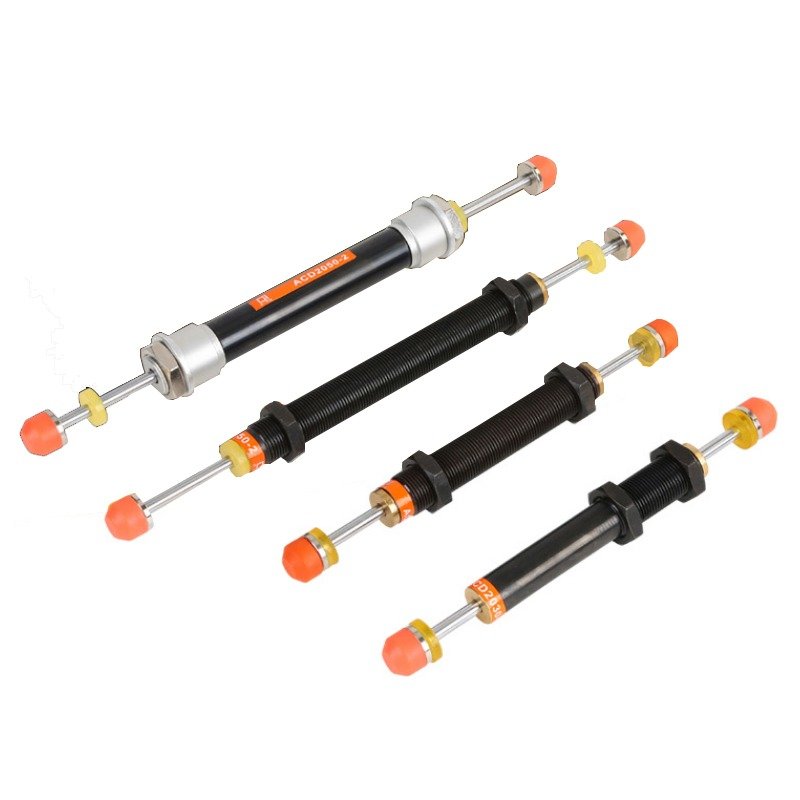
Explore mechanical shock absorbers for impact protection. Learn how these devices manage kinetic energy and protect equipment from damage in industrial applications.
Want to learn more about our products? Click here!
Introduction
Industrial machinery faces constant impact forces. Cylinder stops, conveyor transfers, and automated movements create shock loads that damage equipment. Standard mechanical stops transfer this impact energy directly to the machine frame. Over time, this causes wear, misalignment, and component failure. Mechanical shock absorbers offer a solution. Specifically, they convert kinetic energy into thermal energy, decelerating loads smoothly. If your equipment experiences repetitive impacts, mechanical shock absorbers provide reliable protection that extends service life and reduces maintenance costs.
How Mechanical Shock Absorbers Work
Mechanical shock absorbers operate on a straightforward principle. A piston moves through an oil-filled chamber when a moving load contacts the buffer. This piston contains precisely sized metering orifices that restrict oil flow. The restriction creates resistance, absorbing the kinetic energy of the moving load. The deceleration occurs smoothly, eliminating the harsh jolt of metal-to-metal contact. The shock absorber converts the kinetic energy into thermal energy, which dissipates through the housing. Some designs feature progressive damping, where resistance increases as speed increases, providing consistent stopping performance across a range of conditions.

Key Features of Mechanical Shock Absorbers
Mechanical shock absorbers incorporate several features for reliable performance. First, they use high-strength materials like hardened steel and aluminum alloy to withstand repeated impacts. Second, they feature precision-ground pistons and cylinders for consistent damping characteristics. Third, many models offer adjustable damping settings for different load conditions. Fourth, they include wear-compensating seals that maintain oil retention over the device’s life. Fifth, corrosion-resistant coatings protect against moisture and chemical exposure. The robust design ensures consistent performance over millions of cycles.
Benefits of Mechanical Shock Absorbers
Mechanical shock absorber deliver several important benefits. First, they protect equipment from impact damage, extending service life. Second, they reduce noise levels significantly. Impact noise can exceed 100 decibels. Mechanical shock absorber cut this noise dramatically, creating a safer work environment. Third, they improve product quality. Smooth deceleration prevents product damage during handling. Fourth, they increase production speeds by safely managing higher impact velocities. Fifth, they reduce maintenance requirements, saving time and labor costs. These benefits make them essential for modern automation.
Common Applications
Mechanical shock absorber serve many industrial applications. Automated assembly lines use them for cylinder stops and part transfer stations. Conveyor systems rely on them to decelerate pallets and packages. Packaging equipment uses them for cutting and sealing operations. Overhead cranes incorporate them to arrest trolley and bridge movement. Machine tools use them to dampen heavy table motion. Any application requiring controlled deceleration benefits from mechanical shock absorber.
Selecting the Right Mechanical Shock Absorber
Choosing the appropriate mechanical shock absorber requires careful evaluation. First, calculate the kinetic energy the buffer must absorb. This depends on the moving mass and impact velocity. Next, consider the cycle rate, as this affects heat dissipation. Then, determine the required stroke length for smooth deceleration. Evaluate the mounting style needed for your application. Consider environmental conditions like temperature and chemical exposure. Finally, assess adjustability requirements. Some applications benefit from externally adjustable damping.

Conclusion
Mechanical shock absorber provide essential impact protection for industrial equipment. Their hydraulic damping design ensures smooth deceleration without the harsh impact of mechanical stops. By absorbing kinetic energy and dissipating it as heat, these devices prevent damage to machinery and products. When you need reliable impact protection for your automation systems, mechanical shock absorber deliver consistent performance. By selecting the right model for your application, you reduce maintenance costs and extend equipment life.
Tex/Fax: 0086-577-62840011
WhatsApp: 0086-13355775769
mechanical shock absorbers
impact protection
kinetic energy
hydraulic damping
deceleration
automated assembly lines
conveyor systems
cycle rate
stroke length
industrial applications