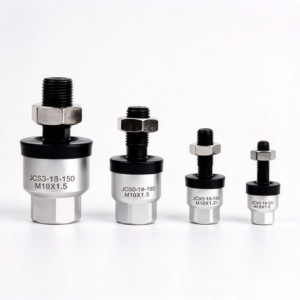
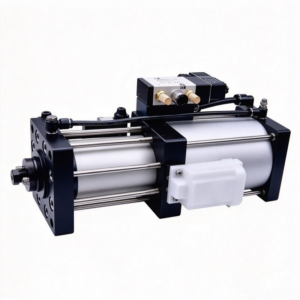
Fixed Hydraulic Buffers for Consistent Deceleration.
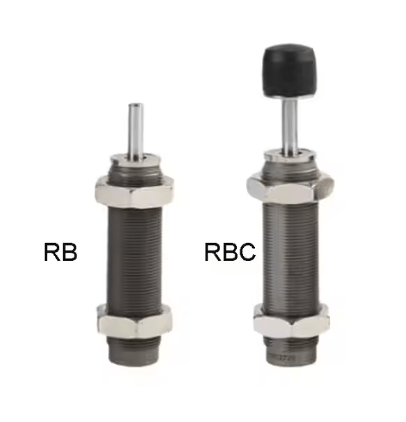
Explore fixed hydraulic buffers for consistent deceleration in industrial applications. Learn how these shock absorbers provide reliable impact protection.
Want to learn more about our products? Click here!
Introduction
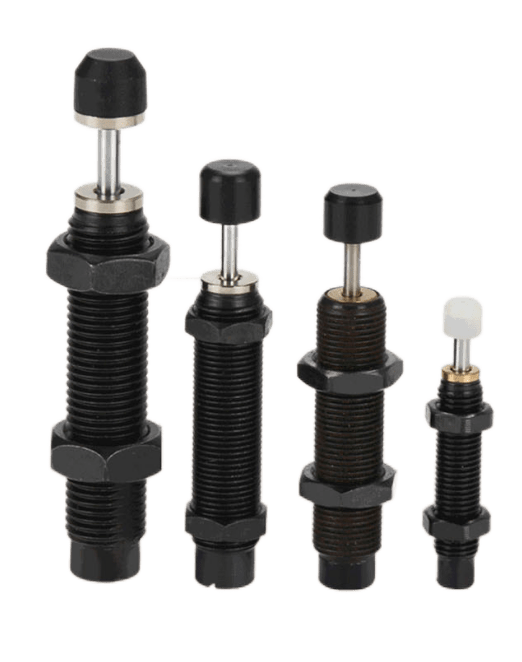
Fixed hydraulic buffers are essential components in motion control systems. They provide controlled deceleration for moving loads, absorbing kinetic energy and converting it into heat. Unlike adjustable models, fixed hydraulic buffers have a preset damping curve. This makes them ideal for applications with consistent load and speed conditions. If your machinery operates with predictable parameters, fixed hydraulic buffers offer a simple, cost-effective solution for impact protection.
How Fixed Hydraulic Buffers Work
These buffers operate on a straightforward principle. A piston moves through an oil-filled chamber when a load impacts. The piston contains fixed orifices that restrict the oil flow. This restriction creates resistance, which absorbs the kinetic energy of the moving load. The result is a smooth, controlled stop without the harsh jolt of mechanical stops. The fixed orifice design means the damping characteristics do not change. This ensures predictable, repeatable performance every time. The dissipated energy transfers to heat, which the buffer dissipates through its body to the surrounding air.
Key Features and Benefits
Fixed hydraulic buffers offer several important advantages. First, they provide consistent performance. The fixed damping curve ensures the same deceleration rate with each impact. Second, they are reliable and durable. The simple design contains fewer moving parts, reducing the risk of failure. Third, they are cost-effective. Fixed buffers typically cost less than adjustable models, making them an economical choice for many applications. Fourth, they require minimal maintenance. Sealed designs prevent contamination and reduce maintenance needs. Fifth, they offer compact installation. The integrated design requires less space than separate shock absorber and mounting components.
Common Applications
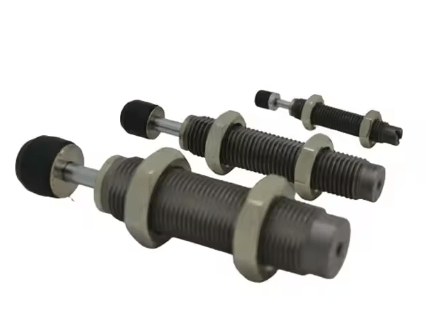
Fixed hydraulic buffer serve many industrial applications. Automated assembly lines use them for cylinder stops and part transfer stations. Conveyor systems rely on them to decelerate pallets and packages. Packaging equipment uses them to control motion in cutting and sealing operations. Overhead cranes incorporate them to arrest trolley travel. Machine tools use them to dampen table and slide movement. Foundry equipment uses them to handle the high temperatures and harsh conditions. Any application with consistent loads and speeds can benefit from the reliable deceleration that fixed hydraulic buffers provide.
Selecting the Right Fixed Hydraulic Buffer
Choosing the correct fixed hydraulic buffer requires careful consideration. First, calculate the kinetic energy the buffer must absorb. This depends on the moving mass and impact velocity. Consider the cycle rate, as this affects heat dissipation. Next, determine the required stroke length. Longer strokes provide more deceleration distance, reducing impact forces. Evaluate the mounting style needed for your application. Some models feature threaded bodies, others have flanges or clevis mounts. Consider the environment. Temperature extremes, moisture, and contaminants affect seal and material selection. Choose corrosion-resistant materials for harsh environments.
Conclusion
In conclusion, fixed hydraulic buffer provide consistent, reliable deceleration for industrial applications with predictable operating conditions. Their simple design, cost-effectiveness, and durability make them a practical choice for many motion control needs. When your application requires controlled stopping of moving loads without the need for adjustment, fixed hydraulic buffer deliver dependable performance that protects equipment and improves productivity.
Tex/Fax: 0086-577-62840011
WhatsApp: 0086-13355775769
fixed hydraulic buffers
consistent deceleration
impact protection
kinetic energy
damping curve
motion control
automated assembly lines
conveyor systems
stroke length
industrial applications