Pneumatic Finger Gripper Benefits.
Discover how a pneumatic finger gripper boosts speed, precision, and reliability in your automation line. Lightweight design, strong grip, and easy integration.
Want to learn more about our products? Click here!
Why Choose a Pneumatic Finger Gripper for Your Automation Line
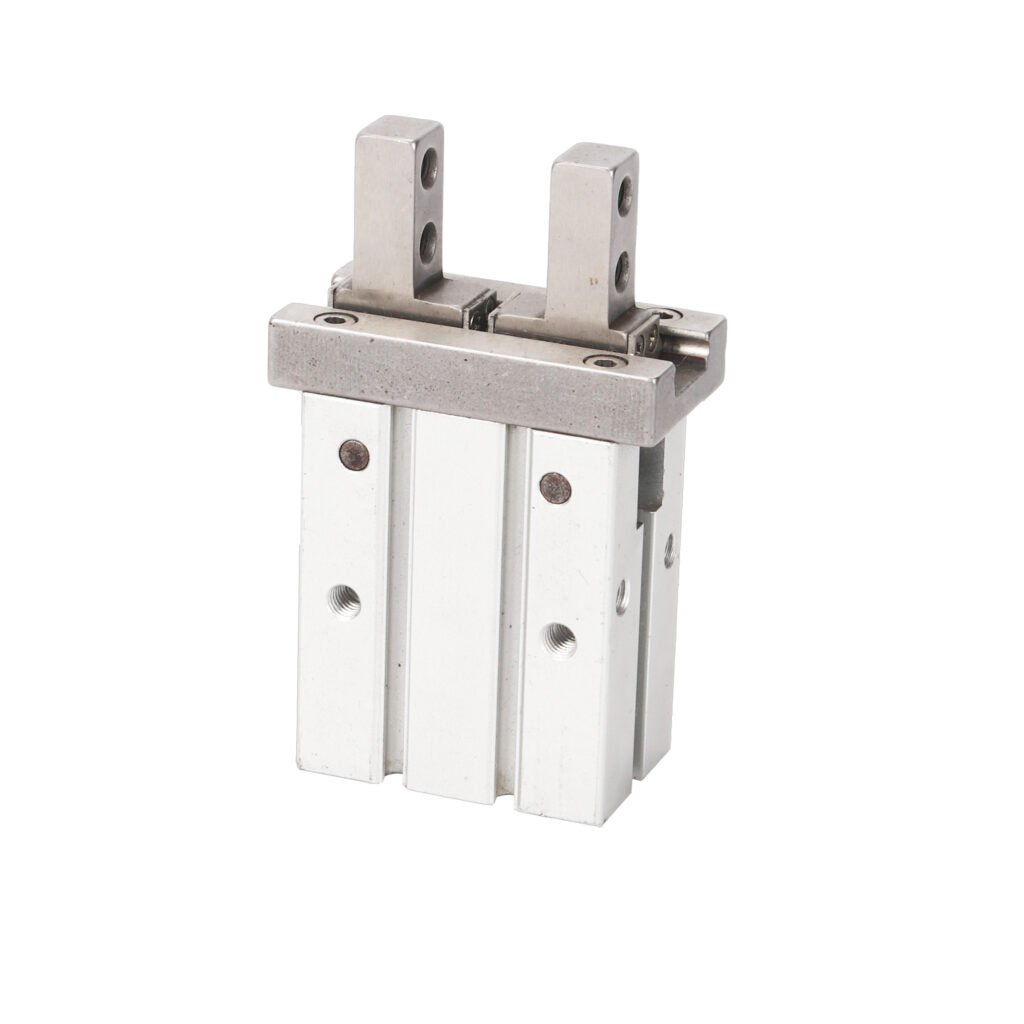
If you run pick-and-place, assembly, or packaging applications, you already know gripping matters. A pneumatic finger gripper delivers steady clamping force without constant adjustment. It uses compressed air to open and close its jaws quickly. This means faster cycle times and fewer jams. You also get a simpler design than electric grippers—easier to install and maintain. Many engineers switch to pneumatic finger grippers when they need repeatable motion day after day.
Built for Real-World Speed and Grip Strength
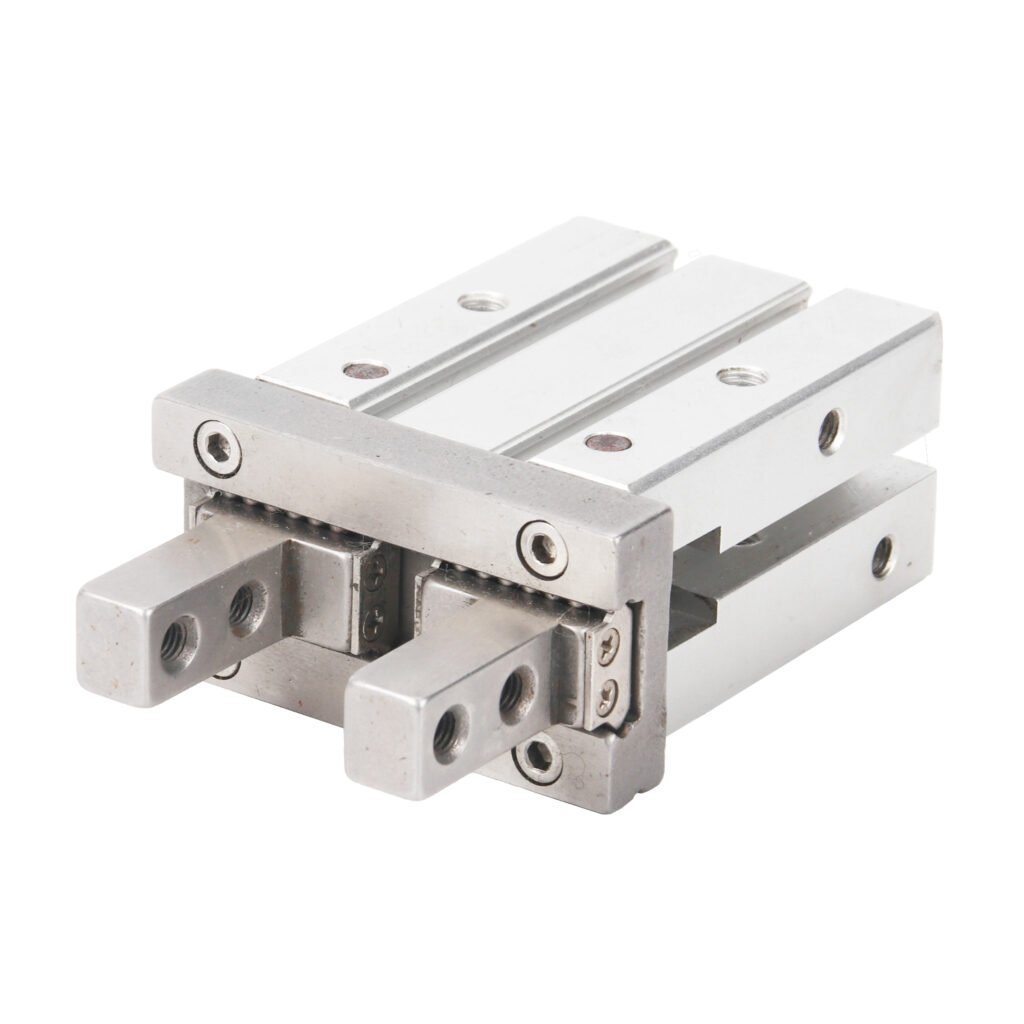
Let’s talk performance. A typical pneumatic finger gripper uses two or three fingers (jaws) that move simultaneously. This centers your part automatically. No sliding, no tilting. The grip force stays consistent from the first shift to the last. For delicate parts like electronics or soft plastics, you can adjust the air pressure to lower the force. For heavy metal blanks, crank it up. This flexibility makes pneumatic finger grippers popular in automotive, food handling, and warehouse sorting. Plus, they work fine in dirty or wet environments because no sensitive electronics sit inside the fingers.
Easy Integration and Low Maintenance
Worried about complex wiring or programming? Forget that. A finger gripper only needs an air line and a simple valve. Connect it, set your pressure, and run. Most units have mounting holes that match standard ISO or DIN patterns. Swap out grippers in minutes. Maintenance usually means wiping off dust and changing the occasional seal. No software updates, no calibration drift. That’s money saved on downtime and training.
Where to Use a Pneumatic Finger Gripper Right Now
Try a pneumatic finger gripper on these jobs:
- Small part sorting (screws, clips, O-rings)
- Feeding blanks into CNC machines
- Loading trays in medical device assembly
- Picking bottles or vials in packaging lines
Because the jaws open wide in a tight space, you can reach into nests or fixtures easily. Add a spring-return option if you need grip-on-loss-of-air safety.
Bottom Line
Pick a finger gripper when you want simple, fast, and tough gripping. It keeps your line moving, works with almost any part shape, and costs less over time than complex electric alternatives. No need to overthink—air does the work.
Tex/Fax: 0086-577-62840011
WhatsApp: 0086-13355775769