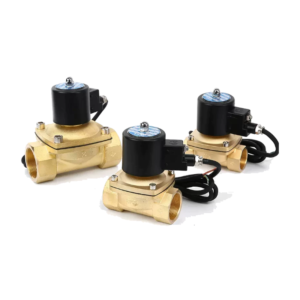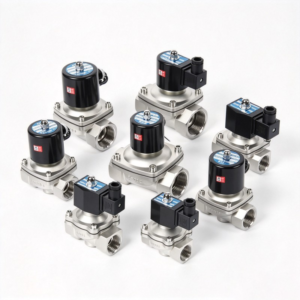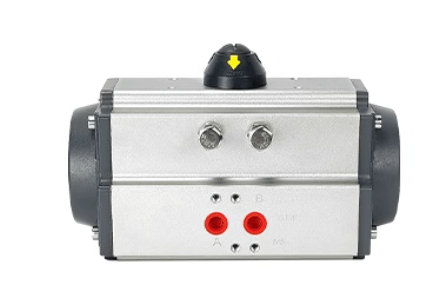
Check Valve Guide One-Way Protection for Your Air Lines.
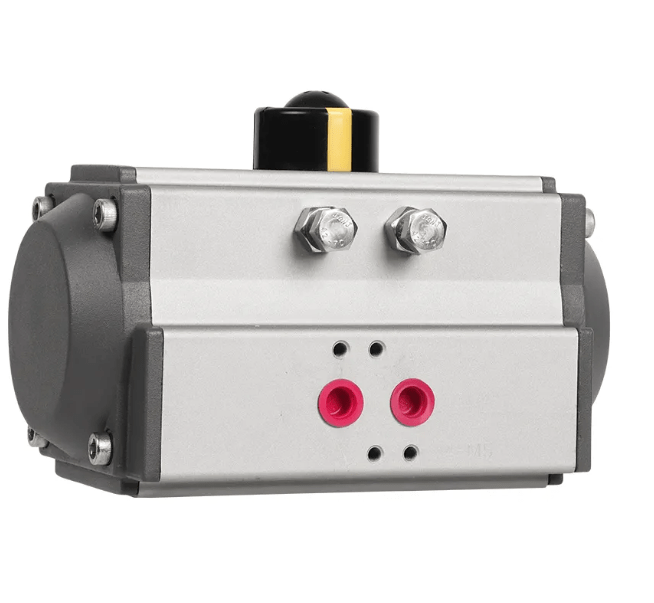
Need a reliable Check Valve Guide ? It stops reverse flow automatically. Learn how this simple device protects your pneumatic system and prevents damage.
Want to learn more about our products? Click here!
Let’s be honest: air does not always go where you want it to. Sometimes it flows backward, messing up your timing or even damaging components. That is why every pneumatic system needs a check valve. This small but mighty device lets air flow in one direction only. No backflow. No surprises. Just clean, reliable operation.
What Does a Check Valve Actually Do?
Think of a check valve as a one-way door for compressed air. It opens when pressure comes from the correct side. It seals shut when pressure tries to sneak back the other way.
You will find them in many places. Keep a cylinder extended while exhausting the control side? Use a check valve. Hold vacuum in a suction cup after turning off the generator? Also a check valve. It works automatically. You do not need to flip a switch or run a control wire. The pressure itself decides when to open or close.
Simple Design That Just Works
Most check valve designs use either a spring and poppet or a free-floating ball. When flow moves forward, the ball or poppet lifts off its seat. Air passes through freely. When flow tries to reverse, the spring or back pressure pushes the ball back onto the seat. That creates a tight seal.
Cracking pressure is the minimum pressure needed to open the valve. Typical values range from 0.5 to 5 PSI for small pneumatic valves. You can choose higher cracking pressure for special applications, but standard options work fine for most systems.
Why Your System Needs One
Here is what happens without a check valve. You turn off a venturi vacuum generator. The suction cup instantly drops your part. That causes scratches or missed cycles. Add a check valve between the generator and the cup. Now the valve traps vacuum. The cup holds for seconds or even minutes after you kill the air supply.
The same idea applies to cylinders. A check valve on the pilot line prevents false triggering when other valves shift. It also keeps a cylinder locked in position when you need it to stay put.
Easy to Install and Maintain
You do not need special tools. Most check valve bodies have standard NPT or BSP threads. Just wrap the threads with seal tape, screw it into your fitting or port, and you are ready.
Pick a valve rated for your system’s maximum pressure. Most pneumatic applications run between 60 and 120 PSI. A standard brass or nickel-plated brass Check Valve Guide handles that range easily. For harsh environments, stainless steel offers extra corrosion resistance.
Bottom Line
A check valve gives you automatic one-way control without any moving wires or switches. It protects your vacuum circuits, locks your cylinders, and keeps backflow from ruining your day. Pick the right cracking pressure and material for your air system. Install it once. Forget about it. Your equipment will run smoother from that moment on. # Check Valve #Valve
Tex/Fax: 0086-577-62840011
WhatsApp: 0086-13355775769