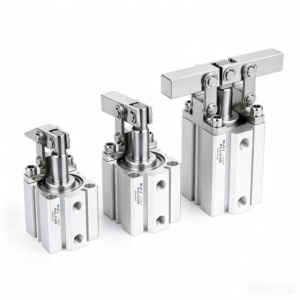
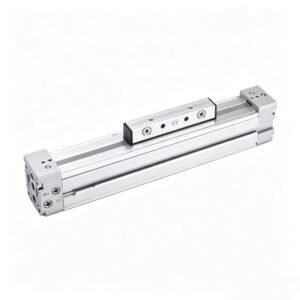
Choose the Right Industrial Air Cylinder Selection.

Find the perfect Industrial Air Cylinder Selection for your application. Our guide explains key types, features, and selection criteria for optimal performance.
Want to learn more about our products? Click here!
Choose the Right Industrial Air Cylinder
Ever wonder what muscle is behind countless factory machines? Often, it’s the reliable industrial air cylinder. These workhorse components convert compressed air into powerful, linear motion to push, pull, lift, and clamp. Selecting the correct one, however, makes all the difference between smooth operation and constant headaches. This guide walks you through the essentials to help you make an informed choice for your automation needs.
Understanding the Main Types and Their Motion
First, let’s break down the common types based on how they move. The single-acting cylinder is the simpler type. It uses air pressure to move the piston in one direction, while a spring returns it. People often choose this for compact, cost-effective tasks like ejection or clamping. On the other hand, the double-acting cylinder uses air pressure for both extending and retracting the piston rod. This design gives you more control over the motion in both directions, making it the go-to choice for most industrial applications like pressing or positioning.
Key Features That Impact Performance and Life
Now, what separates a good cylinder from a great one? Several industrial air cylinder features directly affect performance. The bore size (cylinder diameter) determines the force output—a larger bore generates more force from the same air pressure. Next, consider the rod size; a thicker piston rod better resists bending under heavy side loads. Seals and rod coatings are also critical. High-quality seals minimize air leakage for efficiency, while durable rod coatings like chrome plating fight corrosion and wear, significantly extending service life in harsh environments.
Mounting and Accessory Options for Easy Integration
A cylinder won’t work alone; it needs to connect to your machine. That’s where mounting styles come in. Common options include foot mounts, flange mounts, or clevis mounts. Choosing the right one ensures stable alignment and reduces stress on the cylinder body. Furthermore, adding the right accessories tailors the cylinder to your job. For example, adjustable cushioning at the ends softens the piston’s stop, preventing damaging impacts and noise. Magnetic piston cylinders allow for position sensing with external switches, enabling precise feedback for machine control.
How to Select the Best Cylinder for Your Job
So, how do you pick the best match? Start by asking a few key questions. What is the required force? Calculate this based on your load and system pressure. What is the necessary stroke length? Then, evaluate your operating environment—is there dust, moisture, or temperature extremes that demand special seals or materials? Also, think about speed requirements and whether you need precise mid-stroke control, which might lead you to consider servo-pneumatic options. Matching these factors to the cylinder’s specifications ensures reliable and efficient integration into your system.
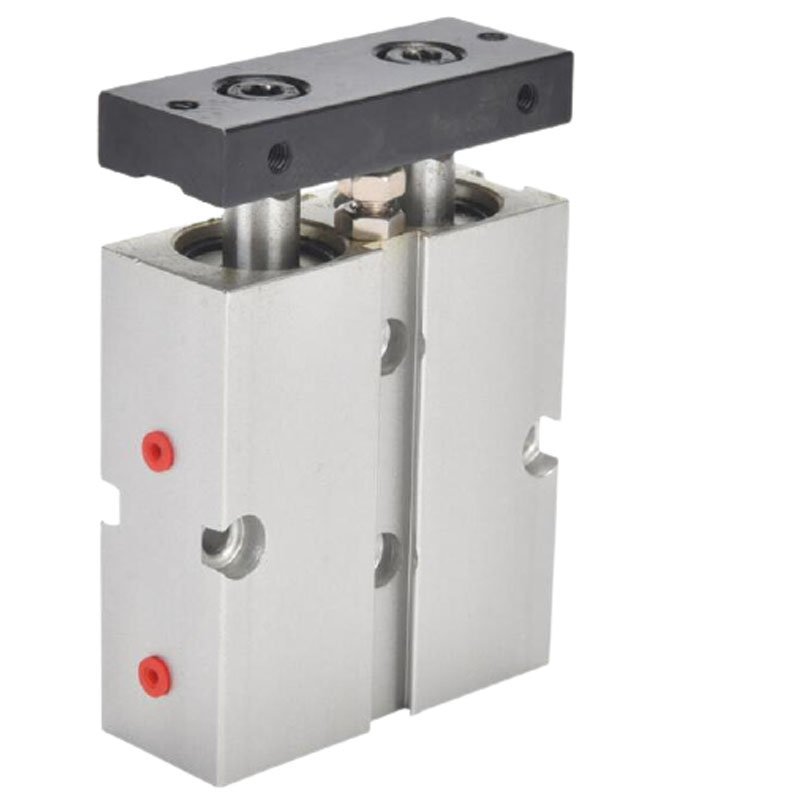
In short, taking the time to understand these core aspects—type, features, and mounting—takes the guesswork out of selecting an industrial air cylinder. The right choice delivers powerful, dependable motion that keeps your automation running smoothly for years. For your next project, use this knowledge as a solid foundation to specify the perfect pneumatic muscle.
Tex/Fax: 0086-577-62840011
WhatsApp: 0086-13355775769
#Industrial Air Cylinder Selection